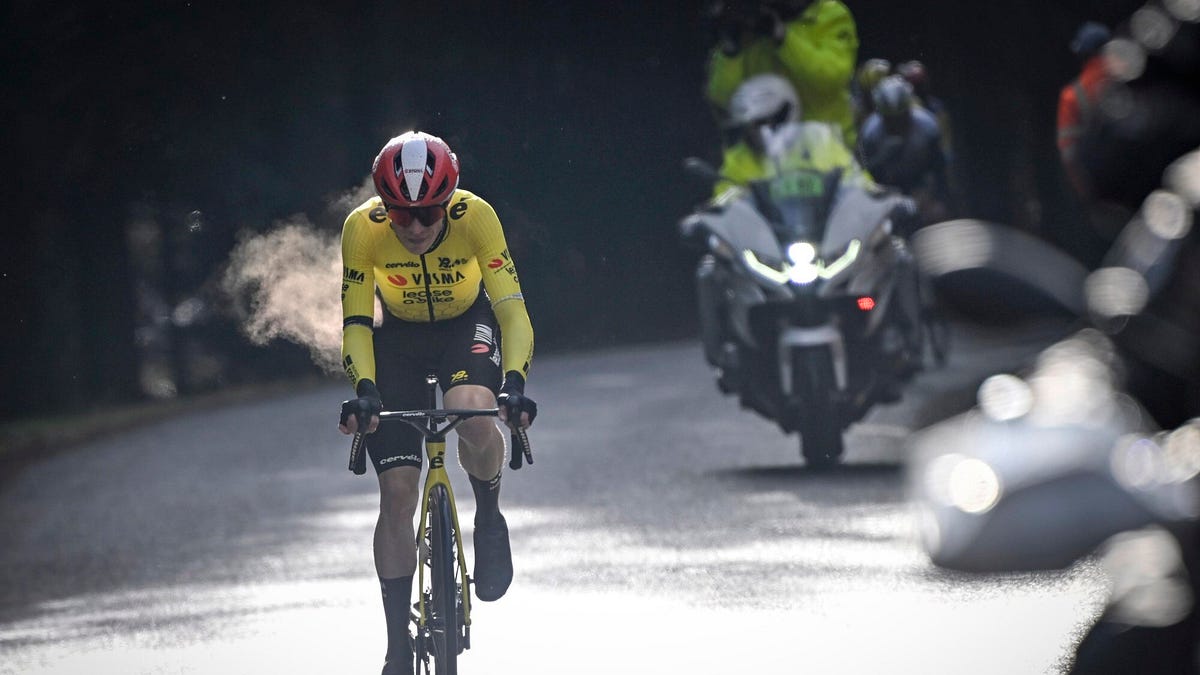
The cycling world held its breath as news emerged from Paris-Nice, confirming a significant setback for one of its brightest stars. Two-time Tour de France champion, Jonas Vingegaard, was forced to withdraw from the "Race to the Sun" after a high-profile crash on the fifth stage. This incident not only curtailed his impressive run, where he was leading the General Classification (GC) before the crash, but also ignited widespread speculation about the ramifications for his meticulously planned season, particularly his coveted bid for a third consecutive Tour de France title. The unexpected exit from Paris-Nice is more than just a missed opportunity in an early-season race; it's a crucial inflection point in Vingegaard's preparation and mental state.
The Unfortunate Turn: Vingegaard's Paris-Nice Crash and Withdrawal
Jonas Vingegaard’s campaign at Paris-Nice was unfolding with characteristic dominance until a fateful moment on Thursday’s fifth stage. The Danish climbing sensation, representing Team Visma | Lease a Bike, was in prime position, leading the overall classification and showcasing the formidable form that has become his hallmark. However, halfway through the stage, disaster struck. Vingegaard crashed, a visibly painful incident that left him with immediate discomfort and a significant blow to his race ambitions.
While he bravely completed the stage, the crash cost him precious time, dropping him from the GC lead to second place, ironically behind his teammate Matteo Jorgenson. The visible pain, particularly around his hand and face, immediately raised concerns. Post-stage examinations by Team Visma | Lease a Bike’s medical staff quickly followed. Thankfully, initial fears of fractures were allayed. As confirmed by the team, Crash Forces Vingegaard Out of Paris-Nice; No Fractures Confirmed, providing a significant silver lining amidst the disappointment. However, the diagnosis of a hand contusion was still serious enough to warrant his withdrawal from the subsequent sixth stage.
The team's official statement underscored the gravity of the situation: "Our medical staff has decided that it is best for him to recover from yesterday’s crash at home and focus on his next goals for the season." This decisive action, while disappointing for fans, highlights the priority placed on rider health and long-term objectives over immediate race results, especially for an athlete of Vingegaard's caliber with such high stakes later in the year.
A Glimmer of Relief: Assessing the Injury and Recovery
The diagnosis of a hand contusion, while painful and debilitating in the short term, is considerably better news than a fracture. A contusion, essentially a severe bruise, involves damage to soft tissues, blood vessels, and sometimes muscle, but crucially, no broken bones. For a professional cyclist, hand injuries are particularly problematic due to the constant pressure and vibration transferred through the handlebars, especially during long stages and technical descents.
Recovery from a hand contusion typically involves a period of rest, ice, compression, and elevation (RICE), followed by a gradual return to activity. While the absence of fractures means a potentially faster recovery timeline, the healing process still requires patience. For Vingegaard, this will likely involve off-bike training, potentially utilizing a hometrainer to maintain cardiovascular fitness without putting stress on his injured hand. As one analyst noted, "He goes not to a standstill because of this, but it is a small bump on the road."
The team's decision to send him home for recovery is a strategic one, allowing Vingegaard to recuperate in a controlled environment, away from the stresses and demands of competitive racing. This personalized recovery plan will be crucial in ensuring he returns to full strength without residual issues. For more details on the injury itself, you can refer to our article: Jonas Vingegaard Withdraws From Paris-Nice With Hand Contusion.
The good news is that Vingegaard is known for his dedication and rigorous training regimen. His ability to adapt and focus, even during setbacks, has been a key component of his success. While it's never optimal to alter race plans, the long lead-up to the Tour de France provides a valuable buffer for this type of recovery.
The Tour de France Equation: Repercussions and Resilience
The primary concern following Vingegaard Paris-Nice withdrawal is undoubtedly its impact on his Tour de France preparations. The Tour is the undisputed pinnacle of the cycling season, and Vingegaard has built his last two seasons around peaking specifically for July. Paris-Nice was a crucial part of his early-season build-up, offering high-level competition, race rhythm, and an opportunity to test his form against formidable rivals.
Potential Disadvantages:
- Loss of Race Rhythm: Nothing replicates the intensity and tactical demands of Grand Tour-level racing. Missing stages of Paris-Nice means less time spent honing race craft, especially crucial in high-pressure situations.
- Mental Setback: Crashing out of a race while leading can be psychologically taxing, even for a seasoned champion. Overcoming frustration and maintaining focus on long-term goals is vital.
- Altered Training Schedule: While off-bike training maintains fitness, it can't fully replace specific road miles and high-intensity efforts needed to reach peak climbing form.
Potential Advantages:
- Forced Rest and Recovery: Sometimes, an unexpected break can be beneficial, preventing overtraining and allowing the body to fully recover from accumulated fatigue. This could leave him fresher for the latter part of the season.
- Reduced Risk Exposure: Avoiding the remaining stages of Paris-Nice, with its inherent risks of further crashes or illness, could be a blessing in disguise.
- Targeted Training: The recovery period allows Vingegaard and his team to implement a highly personalized training block, focusing on specific weaknesses or areas for improvement without the demands of racing.
Historically, top riders have sometimes bounced back stronger from early-season setbacks. The long gap until July means there is ample time for a full recovery and a re-calibration of his training schedule. His rivals, while perhaps noting his absence, will know better than to underestimate a champion of Vingegaard's caliber. This incident may even add another layer of motivation for the Dane.
Team Visma | Lease a Bike's Evolving Strategy Post-Crash
The crash and withdrawal of Jonas Vingegaard from Paris-Nice highlight the incredible depth and adaptability of Team Visma | Lease a Bike. While losing their GC leader is a blow, the immediate aftermath showcased their strategic acumen. Teammate Matteo Jorgenson, who inherited the yellow jersey, demonstrated the team's ability to pivot seamlessly. Reports indicated Vingegaard himself encouraged Jorgenson to race for himself after the crash, a testament to the strong team ethos.
Sports Director Grischa Niermann's concern for Vingegaard's hand was palpable, yet the team's professionalism ensured they continued to race aggressively. Victor Campenaerts notably stayed with Vingegaard post-crash, embodying the protective role of a teammate. This incident underscores the importance of having multiple strong riders capable of stepping up when unexpected challenges arise. For Visma | Lease a Bike, the objective extends beyond individual victories; it encompasses overall team success and the long-term health of their athletes.
Moving forward, the team will undoubtedly adjust Vingegaard's race calendar. While the main goal remains the Tour de France, his preparation races, such as the Critérium du Dauphiné, might see a revised approach or even a substitution depending on his recovery progress. The team's medical and performance staff will work closely with Vingegaard, ensuring every step of his return is carefully managed to maximize his chances for success in July.
Beyond the Road: Mental Fortitude and the Path Ahead
For a rider like Jonas Vingegaard, who thrives on meticulous preparation and high-stakes competition, a crash while leading a major race can be a significant psychological hurdle. The frustration of such an untimely incident, especially when form is strong, is immense. However, Vingegaard has consistently shown remarkable mental fortitude throughout his career, particularly in overcoming challenges and maintaining a laser-like focus on his ultimate goals.
His resilience, coupled with the unwavering support of Team Visma | Lease a Bike, will be crucial in turning this "bump on the road" into a mere footnote in his season. The time away from racing, while initially a setback, can also serve as an opportunity for mental rejuvenation and renewed determination. It allows for a fresh perspective, a chance to reflect, and to channel any frustration into an even more intense and focused training block.
The path ahead involves not just physical healing but also reinforcing the mental strength required to contend for a third Tour de France title. Expect Vingegaard to emerge from this period of recovery even more determined, ready to tackle the remaining challenges of the season with his characteristic quiet intensity and relentless drive.
In conclusion, Jonas Vingegaard’s withdrawal from Paris-Nice due to a hand contusion is undoubtedly a setback, interrupting his strong start to the season and impacting his immediate race schedule. However, the absence of fractures, coupled with the long lead-up to the Tour de France, provides ample opportunity for a full recovery. Team Visma | Lease a Bike’s strategic decision to prioritize his health, alongside Vingegaard's proven resilience and the team's depth, suggests that this incident will likely be a temporary detour rather than a derailment of his season goals. The cycling world will now keenly watch his recovery and subsequent return, anticipating the determined comeback of a true champion.